

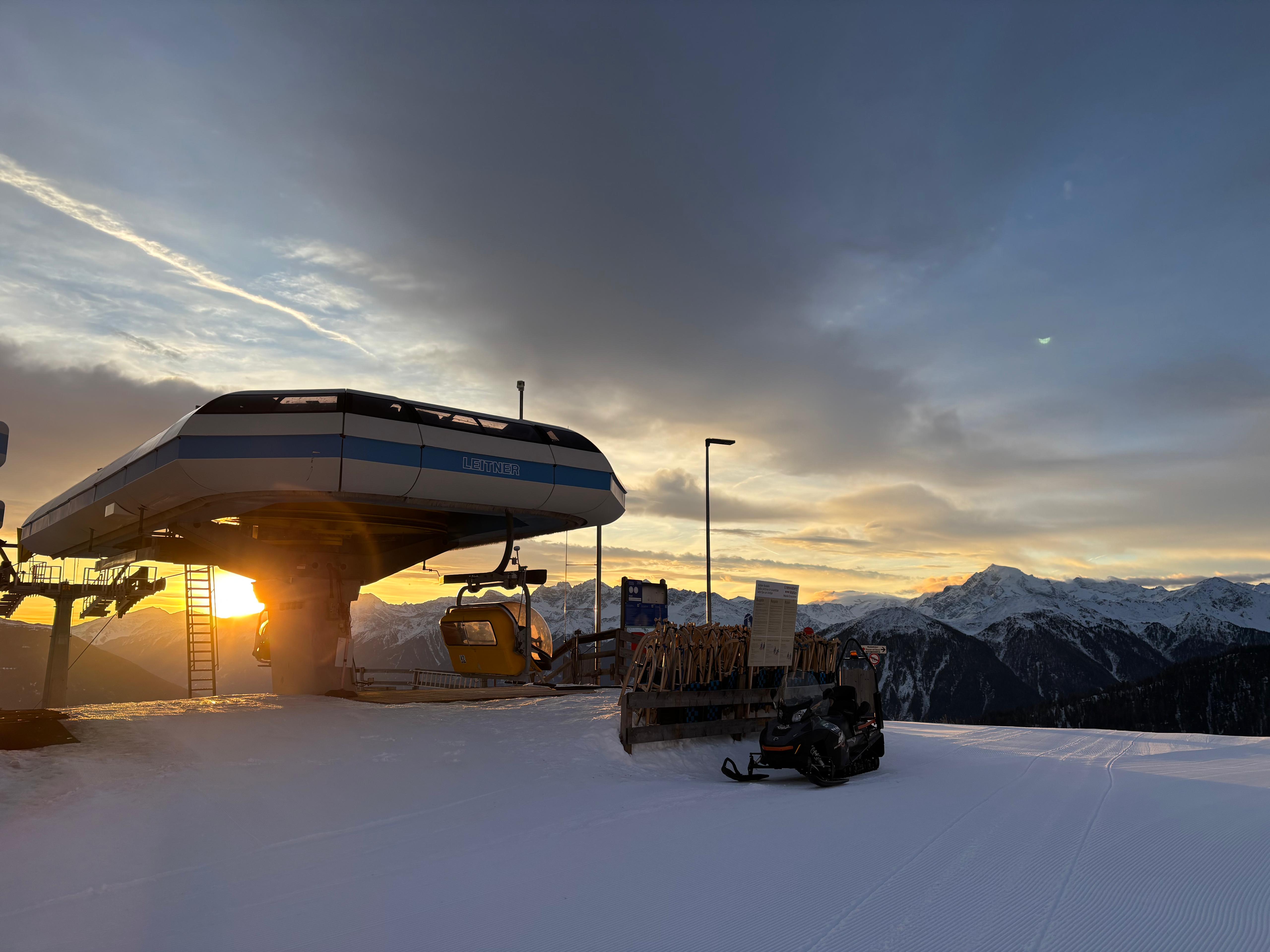
Val Venosta (Vinschgau in German) runs west from Meran to the Reschenpass and the Swiss border. It is the driest and sunniest valley in the Alps, with roughly half the rainfall of the northern Alps, which is why apricots ripen here in July and why the walking season runs from March to November. Apart Vinschgau is in Laatsch, in the upper part of the valley, three kilometres from Glorenza and twenty minutes from Switzerland. A village shop, a bakery and two restaurants are all within five minutes' walk.
Here is what we do when we are there.
The Waalwege
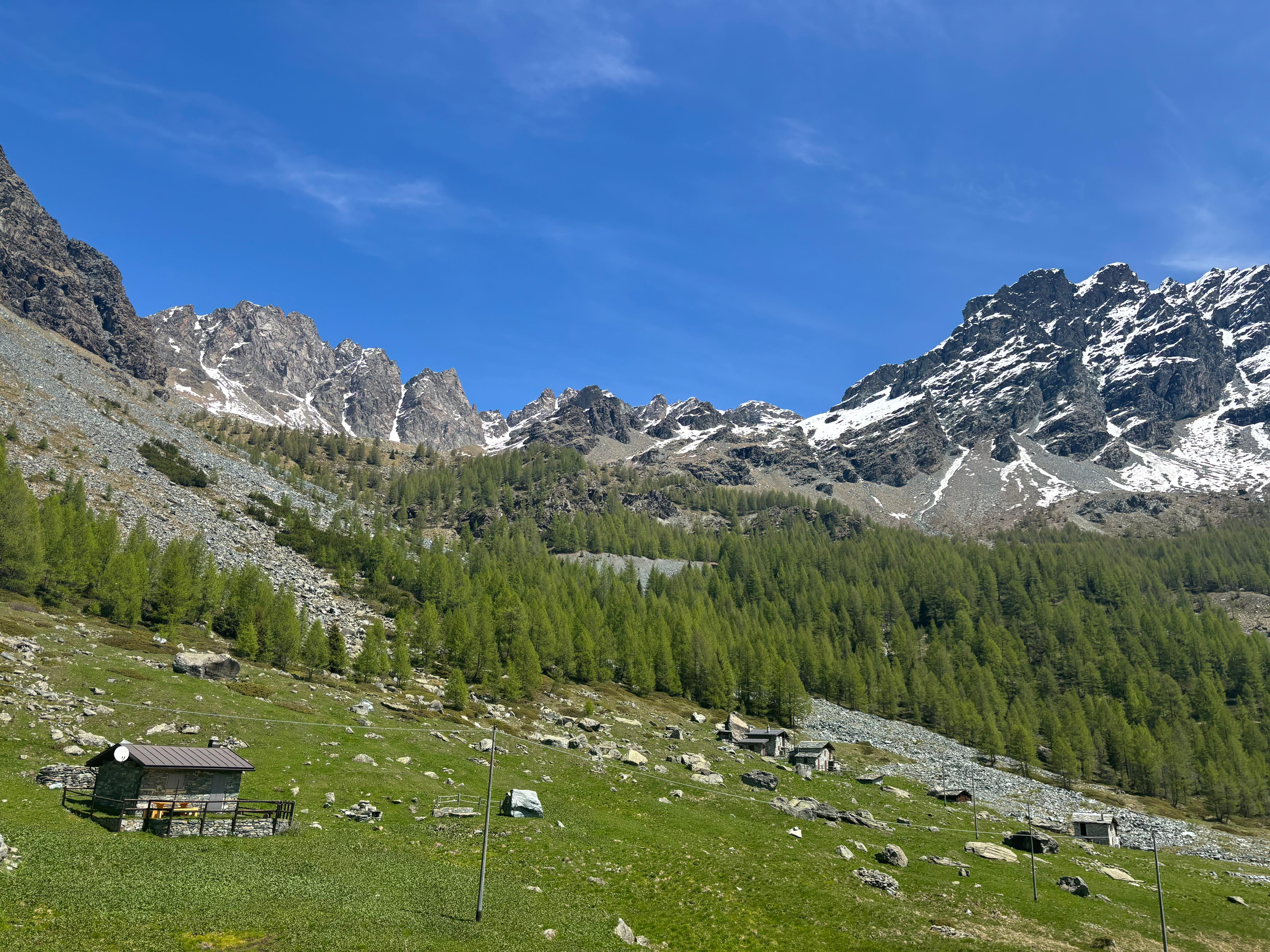
For centuries this valley has irrigated itself with Waale, open channels cut along the mountainside that carry meltwater to the orchards. The maintenance paths beside them are now the best easy walking in South Tyrol: almost level, shaded, with running water beside you the whole way and the valley opening out below.
The Berglwaal and the Leitenwaal above Laatsch make a short morning loop straight from the village. The Waalweg near Schluderns is flatter again and good with a pushchair. Further down the valley, the Marlinger Waalweg above Lana runs for twelve kilometres through vineyards and is walkable in February.
Marienberg abbey and Glorenza
Above Burgeis, at 1,340 metres, stands Marienberg, the highest Benedictine abbey in Europe. The twelfth-century frescoes in its crypt are among the most important Romanesque paintings in the Alps, and the museum in the abbey explains what monastic life here actually involved. The walk up from Burgeis takes about forty minutes.
Glorenza, three kilometres from the house, is the smallest town in South Tyrol: fewer than a thousand people inside a complete ring of medieval walls, with the arcaded main street still intact. It takes twenty minutes to walk around and it is worth doing twice, once in daylight and once after dark.
Nearby, Churburg above Schluderns holds one of the largest private armouries in the world, a genuinely startling room full of fifteenth-century plate armour.
The Reschensee
Twenty minutes up the valley, the reservoir at Reschen drowned the village of Graun in 1950. The Romanesque church tower still stands in the water, and in a hard winter you can walk out to it across the ice. It is the most photographed thing in the valley and, for once, worth it.
The lake is also one of the best thermal-wind spots in the Alps: kitesurfing and windsurfing in summer, snowkiting on the frozen surface in winter, with schools and board hire on the shore.
Skiing: Watles and the Südtirol Skiarena
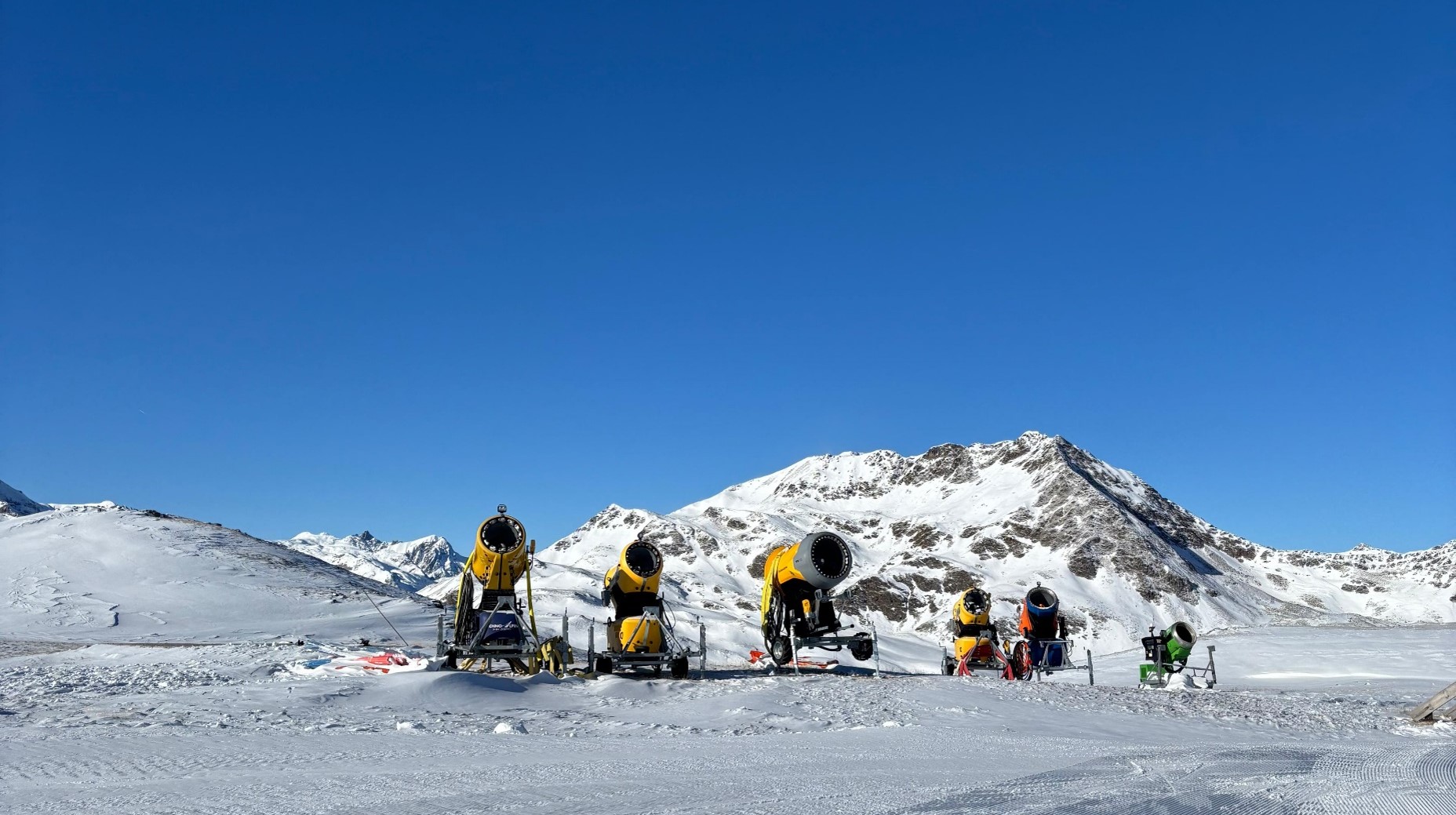
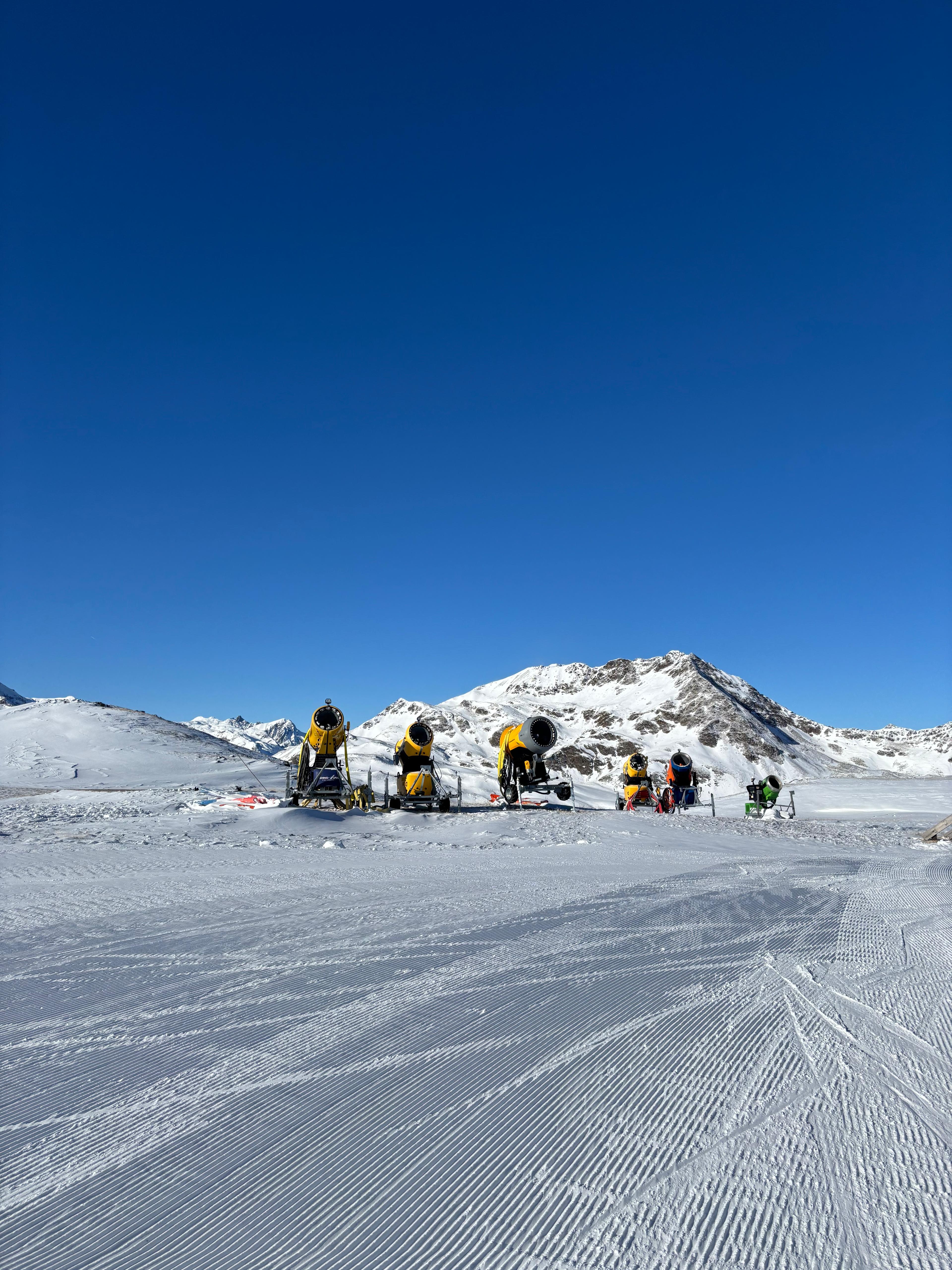
Watles, ten minutes above the village, is a small family mountain with one long quiet descent, gentle terrain and a toboggan run of about five kilometres back down to the valley. It is where children here actually learn to ski, and it costs a fraction of what a day in the Dolomites does.
For bigger days, the Südtirol Skiarena pass (formerly Ortler Skiarena) covers more than a dozen ski areas on one ticket. Schöneben-Haideralm above the Reschensee is half an hour away, and Sulden, at the foot of the Ortler, gives you high, reliable snow from 1,900 to 3,250 metres. Nauders is just over the Austrian border on its own pass.
Sulden and the Ortler
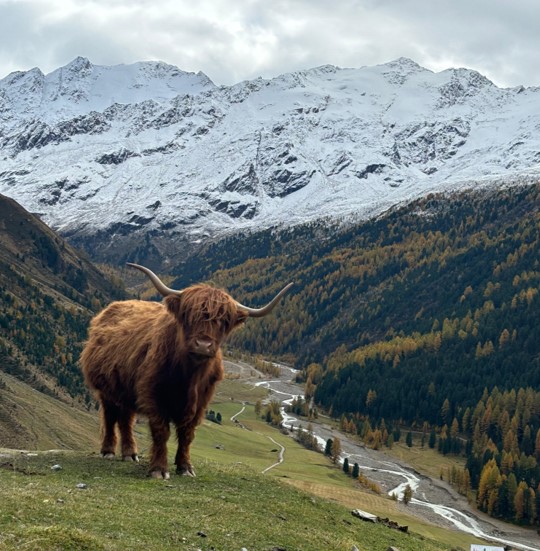
The Ortler is 3,905 metres, the highest mountain in South Tyrol, and Sulden sits directly beneath it. Even without an ice axe the valley is worth the drive: the Messner Mountain Museum Ortles is built into the hillside there, the yaks on the pastures are Messner's, and the walk up to Rifugio Payer puts you on the shoulder of a serious mountain with no technical difficulty.
The whole area is inside the Stelvio National Park, one of the largest protected areas in the Alps, home to ibex, marmots and bearded vultures, with almost no development above the villages.
The Stelvio Pass
Forty-eight hairpins, 2,757 metres, and one of the defining climbs in cycling. From Prad the road gains about 1,800 metres in twenty-four kilometres. If you would rather not do it under your own power, drive it early in the morning before the motorbikes are up, or ride the Umbrail from the Swiss side, which is quieter.
The pass is normally open from late May or early June to the end of October, depending on the snow.
The Vinschgau cycle path
Eighty kilometres from the Reschen reservoir down to Meran, asphalted almost the whole way, losing more than a thousand metres of altitude in the process. It is probably the easiest great ride in the Alps: orchards, castles, the Adige river, and the Vinschgerbahn train from Mals to Meran to bring you and the bike back whenever you have had enough.
Bike hire in Mals and Schlanders, and the train runs roughly hourly.
A detour: Val Senales and Ötzi
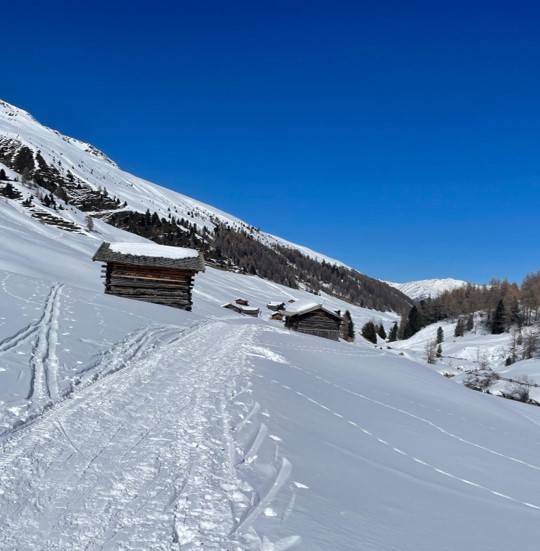
Forty minutes down the valley, the Schnalstal climbs to the ridge where the Iceman was found in 1991, preserved in the ice for five thousand years. The archeoParc in the valley reconstructs how he lived, and the glacier lift takes you to 3,200 metres in ten minutes. It is the best bad-weather day in the region.
Eating in the valley
Vinschgau has its own bread: the Vinschger Paarl, a flat rye pair baked with fennel and caraway, sold in every bakery and best eaten the day it is made with speck and a hard cheese. Beyond that: Schlutzkrapfen, Knödel, apricot jam from the valley's own trees in July, and apple strudel that is better here than anywhere it is served to tourists.
In autumn comes Törggelen, when farmhouses open their cellars for new wine, roast chestnuts and cured meat. Ask us when you book and we will tell you which farms nearby are doing it that week.